
Microsuction or Irrigation? When to Choose Ear Wax Removal
Which ear wax removal method is right for me?
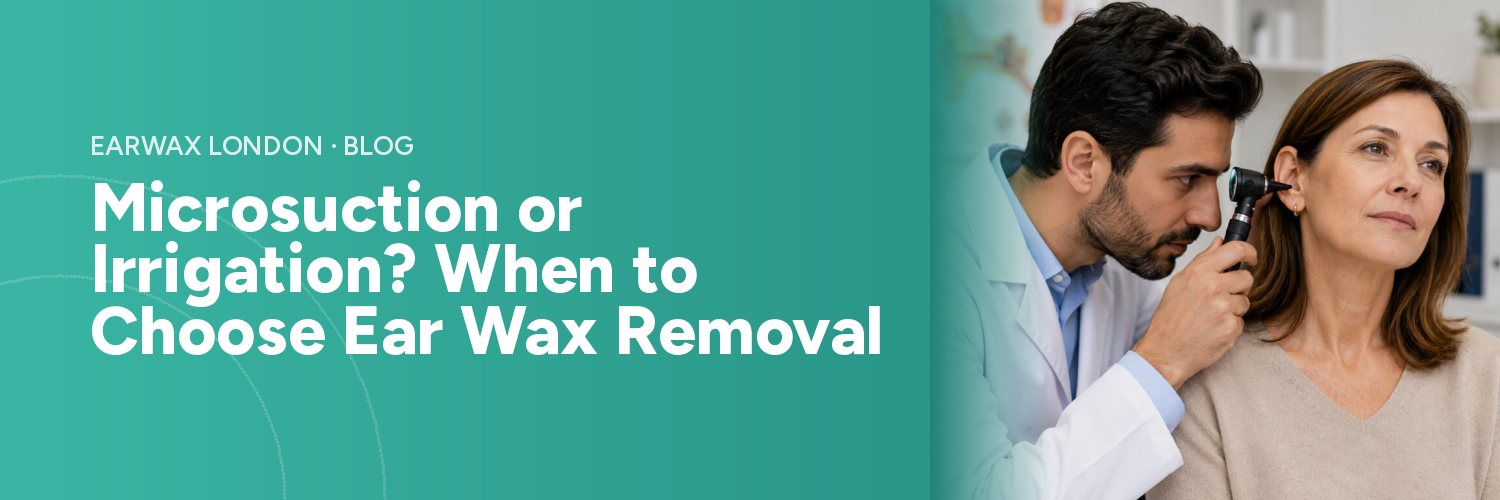
When a patient comes to us with a blocked, muffled or itchy ear we start with a careful video otoscopy. Seeing the ear on screen helps us explain exactly what’s happening and which treatment will work best. As registered audiologists (HCPC registered), we commonly use three approaches: microsuction, manual instrument removal and ear irrigation. You can read a full overview of services on our main ear wax removal page.
Why microsuction is often the preferred option
In clinical practice we find microsuction is the gentlest, most controllable, and water-free method for many patients. Using a small suction probe under a microscope or video otoscope, we remove wax while you and we can see what’s happening. That visibility reduces risk and lets us deal with tricky shapes or fragile eardrums more confidently.
Microsuction is particularly useful for:
- People with a history of ear surgery or a perforated eardrum.
- Hearing-aid users whose earmoulds trap wax.
- Those who are sensitive to water or have frequent ear infections.
- Patients who want a quick, dry appointment—often around 30 minutes.
When irrigation might be appropriate
Ear irrigation (sometimes called ear syringing) uses a controlled stream of water to flush out softened wax. It can be effective for softer, larger wax plugs when the ear canal is otherwise healthy. However, it is not suitable for everyone—especially people with a perforated eardrum, recent ear surgery, or repeated infections.
Why we sometimes choose manual instruments
Manual removal with fine instruments is another safe option when wax is visible and within easy reach. It can be faster for small obstructions and, like microsuction, lets us work with direct vision using the video otoscope.
How we decide during your appointment
Our decision is clinical and patient-centred. During the video otoscopy we assess:
- Wax type: hard, flaky or soft.
- Ear anatomy and any signs of infection or perforation.
- Your comfort, medical history and any hearing devices you use.
We’ll explain the rationale, show you the ear image and outline the expected steps. No referral is needed and we offer same-day appointments across London, including home visits for clients who prefer us to come to them. See our clinic locations on the locations page.
Safety and professional standards
All our clinicians are experienced audiologists and are HCPC registered. You can verify professional registration through the HCPC registration guidance. We follow best-practice clinical guidance in ear care which aims to minimise risk and improve outcomes.
For general background on earwax and when to seek help, the NHS offers a clear overview at the NHS earwax advice page.
What to expect during microsuction
Appointments are usually around 30 minutes. Typical steps include:
- A short medical history and explanation of the procedure.
- Video otoscopy so you can see the wax and hear our plan.
- Microsuction performed with a tiny suction probe while we observe the ear on screen.
- Post-procedure ear check and aftercare advice.
Most people find microsuction well-tolerated. You may hear some short-lived noise or feel slight pressure, but it is not painful in normal circumstances. If you prefer a home visit, we provide those across London; learn more via our contact page.
Aftercare and simple tips to keep ears clear
Aftercare is straightforward. We usually recommend a few practical steps to reduce re‑buildup and protect sensitive ears:
- Avoid inserting cotton buds or any objects into the ear canal.
- For swimmers, use dry-ear practices and consider drying ears gently after water exposure.
- If you use hearing aids, clean earmoulds regularly to reduce wax transfer.
- Attend regular checks if you are prone to recurrent build-up—our team can advise a personalised schedule.
If we recommend softening drops before certain procedures, we give clear instructions on what to use and when to stop.
When to seek urgent care
Some symptoms need immediate attention from a GP or NHS 111. Seek urgent help if you experience:
- Sudden, unexplained hearing loss.
- Severe ear pain.
- Discharge or bleeding from the ear.
- Sudden dizziness or balance problems alongside ear symptoms.
These signs can indicate more serious conditions and should be assessed promptly by medical services.
Real-world examples from our clinic
In our experience, hearing-aid users often report immediate clarity after microsuction because wax trapped against the eardrum or earmould is removed. Swimmers appreciate that the water-free nature of microsuction avoids introducing moisture, which can aggravate infections.
We sometimes see patients who have tried self-cleaning and pushed wax deeper—video otoscopy is invaluable here because it shows the exact problem so we can choose the safest approach.
Book a consultation
If you’re unsure which method is right for you, a short video otoscopy assessment is the quickest way to find out. Use our online form to arrange an appointment, view our opening times and see where we operate in London on the locations page. You can also read common questions on our FAQs page.
Final note
We aim to make ear care simple, safe and explained in language you can follow. If you have symptoms that trouble you, booking a professional assessment helps you get back to clear hearing and comfortable ears quickly.